
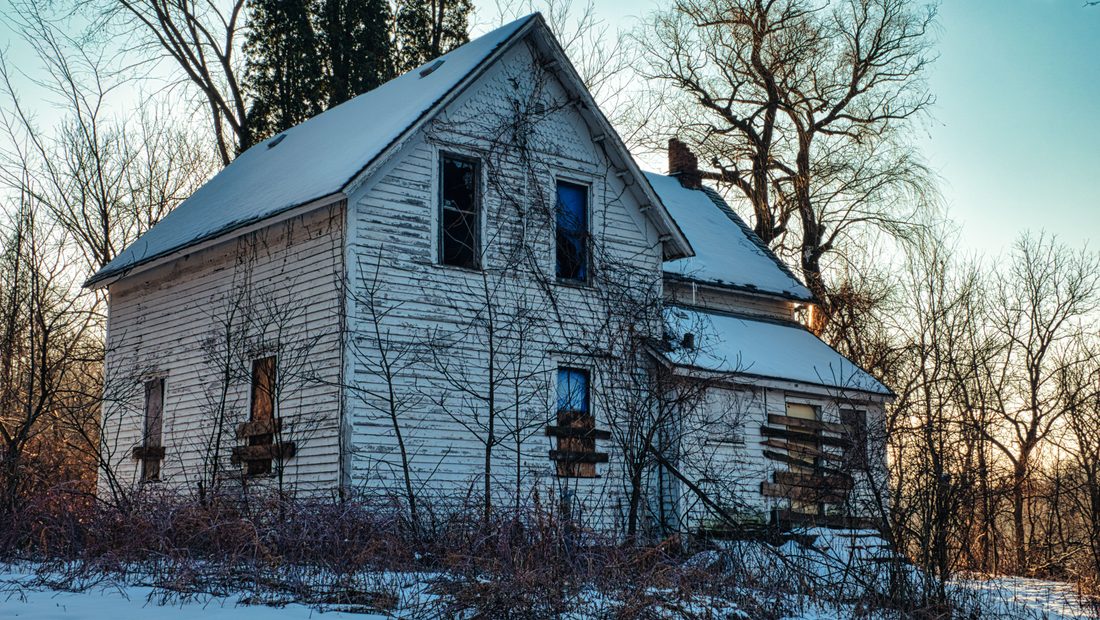
The cheapest way to own a vacant house in Cheyenne is usually to stop owning it before the first hard freeze, which the National Weather Service puts at a median date of October 9. An empty house keeps costing a mortgage, taxes, insurance, and heat every month. Most homeowners policies narrow coverage after 30 to 60 days of vacancy, and one frozen pipe can cost more than a year of those carrying costs. Holding until spring can work if you winterize properly and someone local checks weekly; if not, a cash sale that closes in days often nets more once you subtract what the winter would have cost.
We are House Buyers of Cheyenne, and many of the houses we look at are sitting empty after a move to care, a tenant leaving, a job in Denver or Phoenix, or an inheritance nobody has time for. This guide adds up what an empty house really costs, explains the insurance rule that catches people off guard, shows what a winter does to a house no one is watching, and lays out both paths honestly.
What Does an Empty House in Cheyenne Actually Cost Every Month?
An empty house keeps sending bills. It just stops sending anything back. Here is an illustrative month for a $350,000 Cheyenne house with a mortgage on it.
| Monthly carrying cost | Illustrative amount | Notes |
|---|---|---|
| Mortgage principal and interest | $1,500 | Skip if paid off |
| Property tax | $190 | Median Cheyenne bill about $2,043 a year |
| Homeowners insurance | $225 | About $2,600 to $3,200 a year before any vacancy surcharge |
| Utilities to prevent freezing | $175 | Gas to hold 55°F, plus electric and minimum water |
| Lawn in summer, snow in winter | $150 | Weekly mowing about $100 to $200 a month; snow removal $40 to $90 a visit |
| Every month you wait | $2,240 | About $740 even with no mortgage |
October to April, that is roughly $13,400 with a mortgage, about $4,400 without, and none of it comes back at closing.
The property tax surprise for empty houses
Wyoming's 25 percent homeowner exemption now has a residency test: beginning with tax year 2026 you must live in the house at least eight months of the year to claim it (active-duty military excepted). A house that sits empty more than four months of a tax year loses the exemption, and its bill runs roughly a third higher than the occupied house next door that still gets the break. Confirm yours with the Laramie County Assessor. Taxes come due in two halves, November 10 and May 10, and are prorated at closing, so every month you hold is a month of tax you pay.
Does My Homeowners Insurance Still Cover a Vacant House?
Standard homeowners policies, including the common HO-3 form, contain a vacancy clause: once the house has been vacant more than a set number of consecutive days, usually 60 and sometimes 30, coverage narrows. Vandalism, malicious mischief, and glass breakage typically drop first, and theft and water damage are often limited or excluded. Many policies also exclude freezing damage to plumbing in a vacant or unoccupied home unless you maintained heat or shut off the water and drained the system. A furnished house you plan to return to is unoccupied; an empty one is vacant, and vacant gets the harshest terms.
What to do before day 30
Call your insurer as soon as you know the house will be empty and ask how many days of vacancy the policy allows, which perils drop after that, and what a vacancy endorsement or vacant-home policy costs. Quotes commonly run 25 to 150 percent above a standard premium, still far cheaper than a denied claim on a burst pipe.
How Much Damage Can One Wyoming Winter Do to an Empty House?
Cheyenne's average overnight low sits around 18°F from December through February, a typical season drops about 63 inches of snow, and nine winters in ten bring the first hard freeze by October 27.
Frozen pipes and the furnace nobody hears fail
University of Illinois researchers found uninsulated pipes begin freezing once outdoor temperatures reach about 20°F, which Cheyenne passes on an ordinary January night. In an occupied house a burst pipe gets shut off in minutes; in an empty one it runs for days. State Farm reported more than 20,000 frozen-pipe claims from 2024 through June 2025, averaging above $30,000 each. All of it hinges on a furnace running unattended for months; one tripped breaker can drop the house below freezing within a day.
Winterization checklist if you hold the house
- Decide heat on or water off.Heat on means a thermostat no lower than 55°F. If you cannot guarantee heat, shut the main valve, drain the lines and water heater, and add RV antifreeze to traps and toilets.
- Keep gas and electric active.Tell Black Hills Energy the house is vacant and keep the account current.
- Install alerts.A Wi-Fi thermostat and a leak sensor text you the day the furnace quits, not the month after.
- Protect the plumbing and the roof.Insulate pipes on exterior walls, open cabinet doors under sinks, disconnect hoses, drain outdoor spigots and sprinklers, and clean the gutters.
- Put a person on it.Someone local should walk through weekly and clear the sidewalk within 24 hours of snow, as Cheyenne's nuisance ordinance requires.
Who Is Watching Your Empty House?
An empty house announces itself: dark windows, snow nobody shovels, mail piling up, grass over the city's six-inch limit. Burglars, vandals, and people looking for a place to sleep scan for exactly that. Copper thieves strip pipe, wiring, and the air conditioner coil in an afternoon, and the repair can run into the thousands. The U.S. Fire Administration's most recent national study estimated roughly 23,800 vacant residential building fires a year, many of them set on purpose.
Squatters are the slowest problem and often the most expensive. Wyoming's unlawful occupancy law, in effect since July 1, 2025, lets an owner sign an affidavit and have law enforcement remove an occupant with no right to be there, but anyone who can claim a tenancy sends you to eviction court instead. Adverse possession takes ten years in Wyoming, so nobody takes your title quickly, but they can take your winter and your legal budget.
Cheap deterrents go a long way: lamps on timers, a neighbor's car in the driveway, mail held through USPS, flyers pulled off the door, the walk shoveled, and photos of every room the day it empties so you can prove its condition to an insurer or a court. If someone is inside who should not be, call Cheyenne police rather than confronting them yourself.
Why Is a Vacant House Harder to Sell the Traditional Way?
Empty houses list at a disadvantage, and winter sharpens every one.
- They show poorly. Empty rooms look smaller, every scuff shows, and a cold, echoing house in January does not feel like home.
- Buyers negotiate harder. A vacant listing reads as a motivated seller bleeding carrying costs, so lower offers and longer post-inspection repair lists follow.
- Lenders and appraisers need it running. FHA appraisers are expected to test systems with utilities on; if they are off, the appraisal is made subject to a follow-up observation, which adds time and can add repair conditions.
- The calendar is against you. National Association of Realtors data shows sales bottom out in January and February, so a November listing can sit until March, and a financed buyer then needs another month or more to close.
Meanwhile the carrying costs keep running, plus cleaning, staging, snow service before every showing, and a 5 to 6 percent commission at the end. Our cash buyer versus realtor comparison walks through that math.
Can I Sell From Out of State Without Flying Back?
Many of the vacant houses we see belong to owners who have already left Cheyenne, whether for a job two states away or a PCS out of F.E. Warren. None of it requires a trip back.
- Video walkthrough.You or a neighbor with a key walks us through on a video call, or we meet a lockbox. We buy as-is, so nothing needs cleaning or fixing.
- Written offer within 24 hours.No obligation, no fees, no closing costs. You pick the closing date, as soon as seven days out.
- Sign remotely.Wyoming has allowed remote online notarization since July 1, 2021, so closing documents can be notarized by secure video from wherever you are.
- Close through a licensed title company.TownSquare Title of Wyoming runs the title search, clears any liens from the proceeds, holds escrow, and wires your money on closing day.
Leave behind whatever you do not want. If the house came through an estate, our guide to selling an inherited house in Wyoming covers the probate side, and how selling to a cash buyer works step by step shows the process.
Should You Winterize and Wait for Spring, or Sell Before the Freeze?
| Question | Winterize and list in spring | Sell for cash before the freeze |
|---|---|---|
| When is the money in hand? | May or June, if the sale goes smoothly | As soon as 7 days from the offer |
| Carrying costs, October to April | About $13,400 in the example, $4,400 with no mortgage | Roughly one more month, then none |
| Freeze, fire, and break-in risk | Yours all winter | Ours from closing day |
| Snow, lawn, weekly checks | You arrange and pay for them | Not your problem |
| Selling costs | Commission, cleaning, staging, inspection repairs | None; we cover closing costs |
| Best fit | Paid-off house, reliable local caretaker, no urgency | Mortgage still running, owner out of state, or house needs work |
Why selling now often nets more than it looks
On the $350,000 example, the spring listing gives up roughly $13,400 in carrying costs and about $19,250 in commission at 5.5 percent before a single repair or frozen-pipe deductible: more than $32,000 that never reaches you. A cash offer in October does not have to match a May list price to leave you with more; it only has to come within that gap, and it takes the winter risk off the table. We will not promise a percentage, because every house is different, but we will show the math on yours, starting with how much cash home buyers pay.
Get Your Free, No-Obligation Cash Offer Before the Freeze
If you own an empty house in Cheyenne or Laramie County, the fastest way to stop paying for it is to learn what it is worth as it sits. Request your free cash offer here and you will have a written, no-obligation number within 24 hours, by video walkthrough if you are out of town.
Or call or text Adrian at (307) 274-6014, seven days a week. We are family-run, rated 4.9 out of 5 across 126 Google reviews with an A+ from the BBB, and if the numbers say winterize and wait, we will tell you that too.